
Should I Get a Therapist If I Struggle With Eating More Than I Want To? (Denver Therapist Perspective)
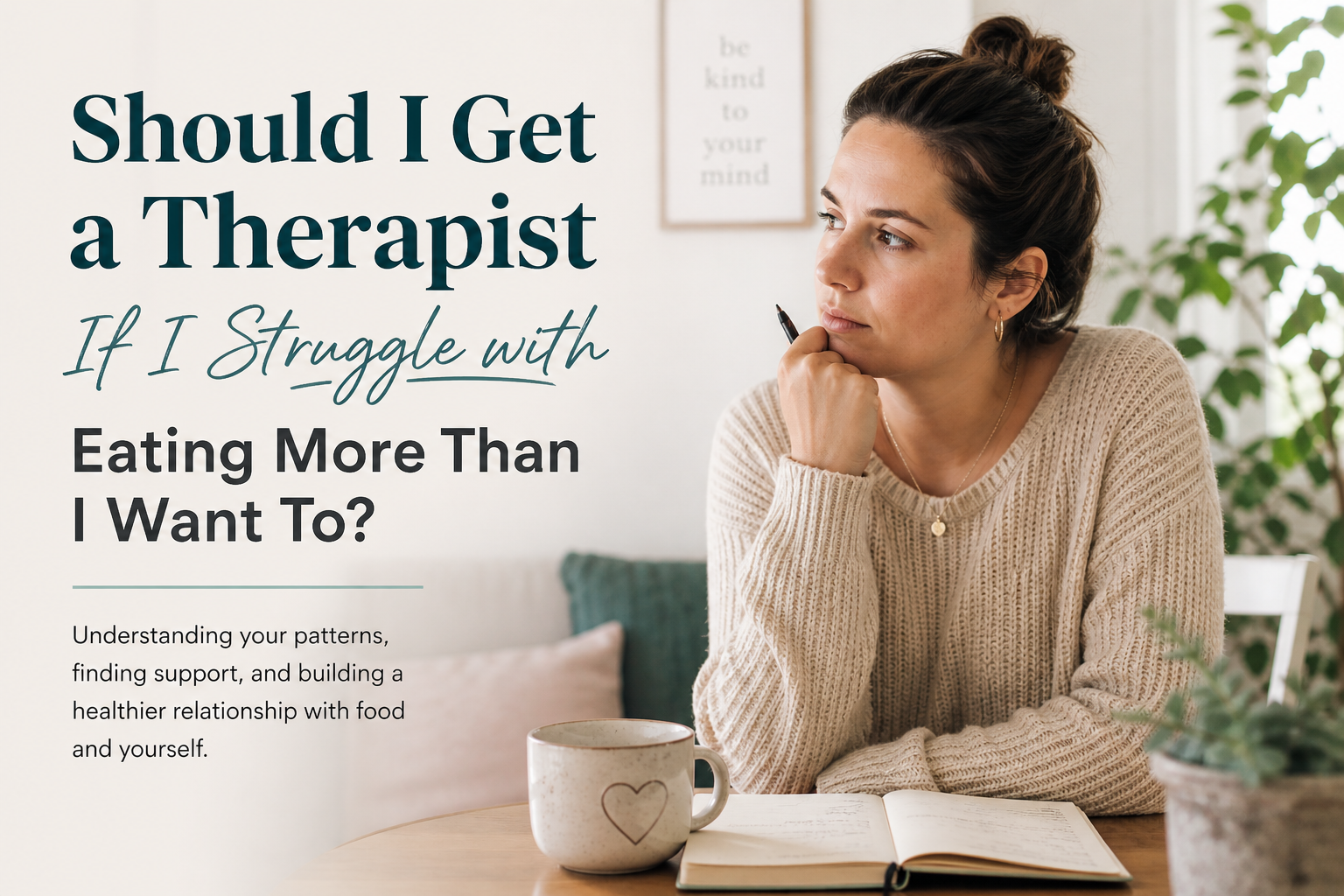
A thoughtful woman journaling at home, representing the experience of struggling with overeating and considering support from a Denver eating disorder therapist for emotional eating patterns.
When Eating Feels Harder Than It “Should” Be
A lot of people assume overeating is just about discipline. But research consistently shows that eating patterns are deeply connected to emotions, thought patterns, and nervous system regulation—not just willpower.
In fact, psychological treatments—especially cognitive behavioral therapy (CBT)—have been shown to significantly reduce binge eating behaviors and help people regain a sense of control around food.
So if you’ve tried to “just stop” and it’s not working, that’s not a failure—it’s a sign that support could be useful.
Signs You Might Benefit From an Eating Disorder Therapist
You don’t need a formal diagnosis to work with a therapist. Many of the clients we see in Denver don’t meet full criteria for an eating disorder—they’re just tired of feeling stuck.
You might benefit from therapy if:
You eat past fullness more often than you’d like
You feel out of control around certain foods
You use food to cope with stress, anxiety, or overwhelm
You restrict during the day and overeat later
You feel guilt, shame, or “mental noise” about food
You’ve tried diets or self-help strategies that didn’t last
Even mild or occasional struggles deserve attention. You don’t have to wait until it gets worse.
What Therapy for Overeating Actually Looks Like
Working with a Denver eating disorder therapist is not about being told what to eat or being put on a rigid plan.
Instead, therapy focuses on helping you understand why the pattern is happening—and how to shift it.
Evidence-based approaches like CBT help reduce binge eating episodes and improve your relationship with food by addressing underlying thought patterns and behaviors.
You can learn more about CBT and eating disorder treatment here:
Depending on your needs, therapy may help you:
Identify emotional triggers for overeating
Build awareness of hunger and fullness cues
Break the restrict–binge cycle
Reduce guilt and all-or-nothing thinking
Develop more flexible, sustainable eating patterns
Other approaches like interpersonal therapy and guided self-help can also be effective, especially when tailored to your specific situation.
For a broader overview of treatment options, this guide is helpful:
Do You Have to Have an Eating Disorder to Go to Therapy?
No.
This is one of the biggest misconceptions.
You don’t need a diagnosis like binge eating disorder to benefit from therapy. In fact, many people seek support before things reach that level—and often have an easier time changing patterns because of it.
If food is taking up more space in your mind than you want, that’s enough reason.
Why Working With a Specialist Matters (Especially in Denver)
If you’re searching for a therapist in Denver, it’s worth finding someone who specializes in eating disorders or disordered eating.
Why?
Because general therapy can help—but specialized therapists understand:
The restrict–binge cycle
How dieting fuels overeating
The role of shame and body image
Evidence-based treatments that actually work
Organizations like the National Eating Disorders Association (NEDA) can also help you understand symptoms and find qualified providers:
A More Helpful Question to Ask Yourself
Instead of asking:
“Is my problem bad enough?”
Try asking:
“Is this taking up more mental or emotional energy than I want it to?”
If the answer is yes, therapy is a valid and worthwhile step.
Final Thoughts
Struggling with eating more than you want to is incredibly common—and very treatable.
Therapy isn’t a last resort. It’s a way to understand what’s driving the behavior and build a more peaceful, sustainable relationship with food.
If you’re in Denver and feeling stuck, reaching out to an eating disorder therapist could be one of the most effective ways to move forward.
You don’t have to keep doing this on your own.