
Why Dieting Leads to Binge Eating
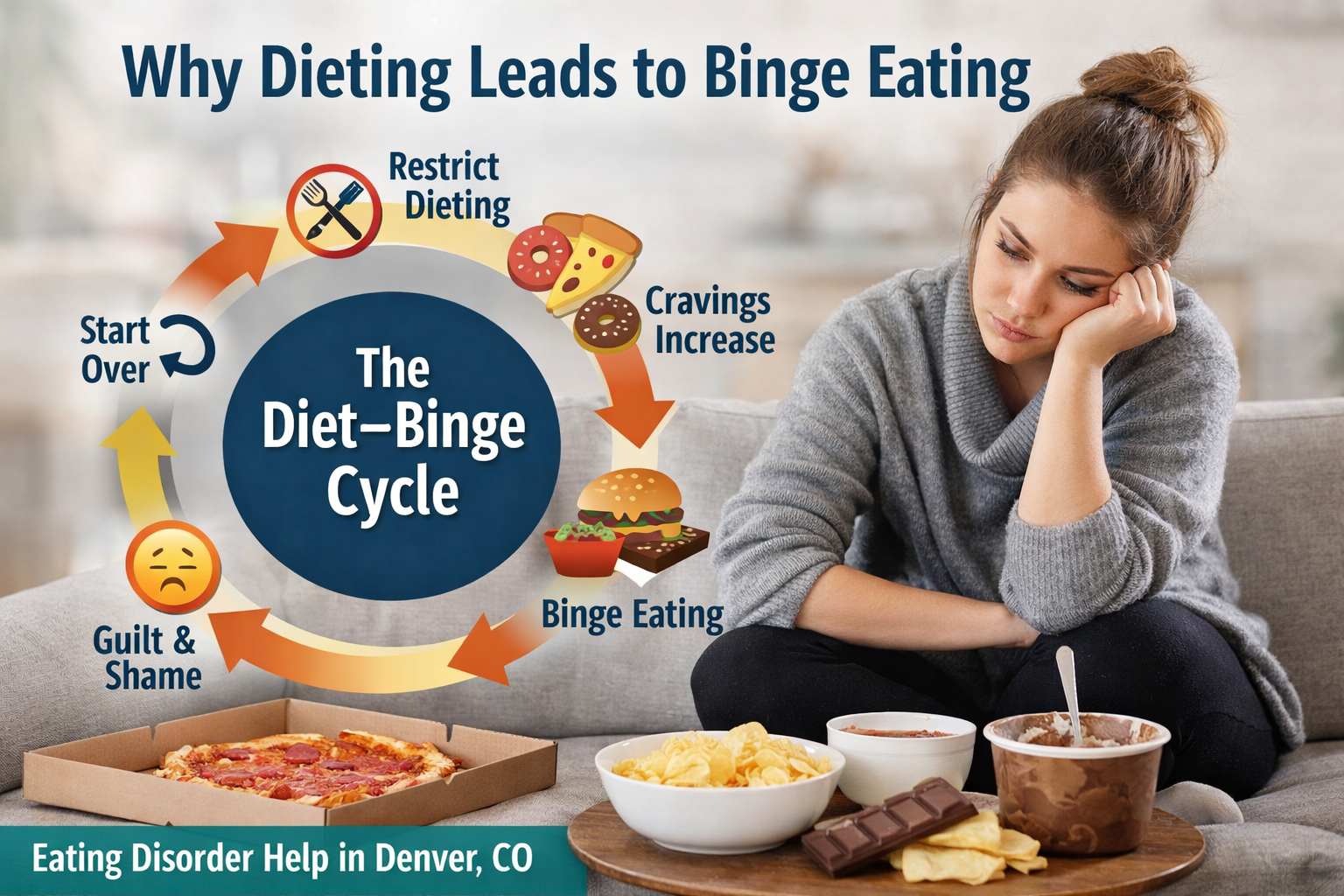
Dieting often leads to binge eating because food restriction triggers both biological and psychological responses that increase hunger and cravings. When the body senses limited food intake, it activates survival mechanisms such as increased hunger hormones, slowed metabolism, and a stronger focus on food. At the same time, strict food rules can create feelings of deprivation that make binge eating more likely. Research consistently shows that dieting is one of the strongest predictors of binge eating behavior.
Common reasons dieting leads to binge eating include:
Increased hunger hormones
Food restriction and deprivation
All-or-nothing thinking about food
Intense cravings for restricted foods
Disconnection from hunger and fullness cues
Many people start a diet hoping to improve their health or feel better in their bodies. But for many individuals, dieting eventually leads to episodes of overeating or binge eating.
If you’ve ever felt like you were doing “well” on a diet and then suddenly lost control with food, you’re not alone. Many clients I work with in my Denver therapy practice describe the same frustrating cycle: restriction followed by binge eating and then intense guilt or shame.
What many people don’t realize is that dieting itself is one of the strongest predictors of binge eating. Research consistently shows that restrictive eating patterns can disrupt both our biology and psychology in ways that make binge eating more likely.
The important thing to understand is this: binge eating is often a response to restriction—not a failure of willpower.
What Is the Dieting and Binge Eating Cycle?
The dieting and binge eating cycle is a pattern that many people experience when they try to control their eating through strict rules or restriction.
The cycle often looks like this:
Starting a diet or restrictive eating plan
Cutting calories or eliminating certain foods
Feeling increasingly hungry and preoccupied with food
Experiencing strong cravings
Binge eating or overeating
Feeling guilt or shame
Restarting another diet
Over time, this cycle can feel incredibly discouraging and difficult to break.
Why Dieting Triggers Binge Eating
Dieting affects both the body and the mind. When the body senses restriction, it activates survival responses designed to protect you from starvation. At the same time, strict food rules can increase cravings and make certain foods feel even more tempting.
Together, these biological and psychological responses make binge eating much more likely.
Biological Reasons Dieting Leads to Binge Eating
Restriction Increases Hunger Hormones
When you reduce calorie intake significantly, your body increases hunger hormones such as ghrelin. At the same time, hormones that help you feel full may decrease.
This can create intense hunger and powerful urges to eat, which can lead to overeating or binge eating episodes.
The Brain Interprets Dieting as Scarcity
From a biological perspective, dieting can signal potential famine to the brain.
When food intake becomes inconsistent or restricted, the brain begins prioritizing food and energy intake. This can lead to:
stronger cravings for calorie-dense foods
increased focus on food
difficulty feeling satisfied
This response is a survival mechanism, not a lack of discipline.
Restriction Slows Metabolism
When the body receives less energy than it needs, metabolism can slow in an effort to conserve energy. This biological adaptation can make dieting feel increasingly difficult and may contribute to binge eating once food becomes available again.
Psychological Reasons Dieting Causes Binge Eating
Food Rules Increase Cravings
Labeling foods as “bad,” “off-limits,” or “cheat foods” can make them feel more desirable.
When people finally allow themselves to eat those foods, they may feel compelled to eat large amounts because they believe they will not be allowed to have them again.
All-or-Nothing Thinking
Dieting often promotes black-and-white thinking around food.
Many people think:
“I already broke my diet, so I might as well keep eating.”
“I’ll start over tomorrow.”
“This is my last chance to eat this.”
This type of thinking can easily lead to binge eating.
Dieting Disconnects Hunger and Fullness Cues
Many diets rely on external rules rather than internal body signals. Over time, this can make it harder to recognize natural hunger and fullness cues. When people become disconnected from these signals, eating patterns often become more chaotic and binge episodes may occur more frequently. Many people struggling with binge eating also experience significant body image distress. Addressing both eating patterns and body image is often an important part of recovery.
How to Stop the Dieting and Binge Eating Cycle
Breaking the dieting cycle often involves shifting away from restriction and toward a more balanced and compassionate approach to eating.
Recovery from binge eating typically includes:
establishing regular and consistent meals
reducing rigid food rules
learning to recognize hunger and fullness signals
addressing emotional triggers for binge eating
developing a more supportive relationship with food and the body
Binge eating disorder is one of the most common eating disorders, and effective treatment often involves both psychological and nutritional support. Many people are surprised to learn that eating enough consistently is one of the most effective ways to reduce binge eating.
Binge Eating Therapy in Denver, Colorado
If you feel stuck in the dieting and binge eating cycle, professional support can make a significant difference.
As a therapist and dietitian in Denver specializing in eating disorders and body image concerns, I work with individuals who want to:
stop binge eating
rebuild trust with food
move away from chronic dieting
develop a healthier relationship with their body
Recovery is possible, and you don’t have to navigate it alone. Working with a therapist who specializes in eating disorders can help you break the dieting cycle and develop a healthier relationship with food. Many clients seeking binge eating therapy in Denver come to treatment after years of struggling with dieting cycles. If you are looking for binge eating therapy in Denver, working with a therapist who understands both the psychological and nutritional aspects of eating disorders can provide meaningful support.