
Why Am I Always So Exhausted? | Denver Therapist Explains Emotional Exhaustion and Burnout
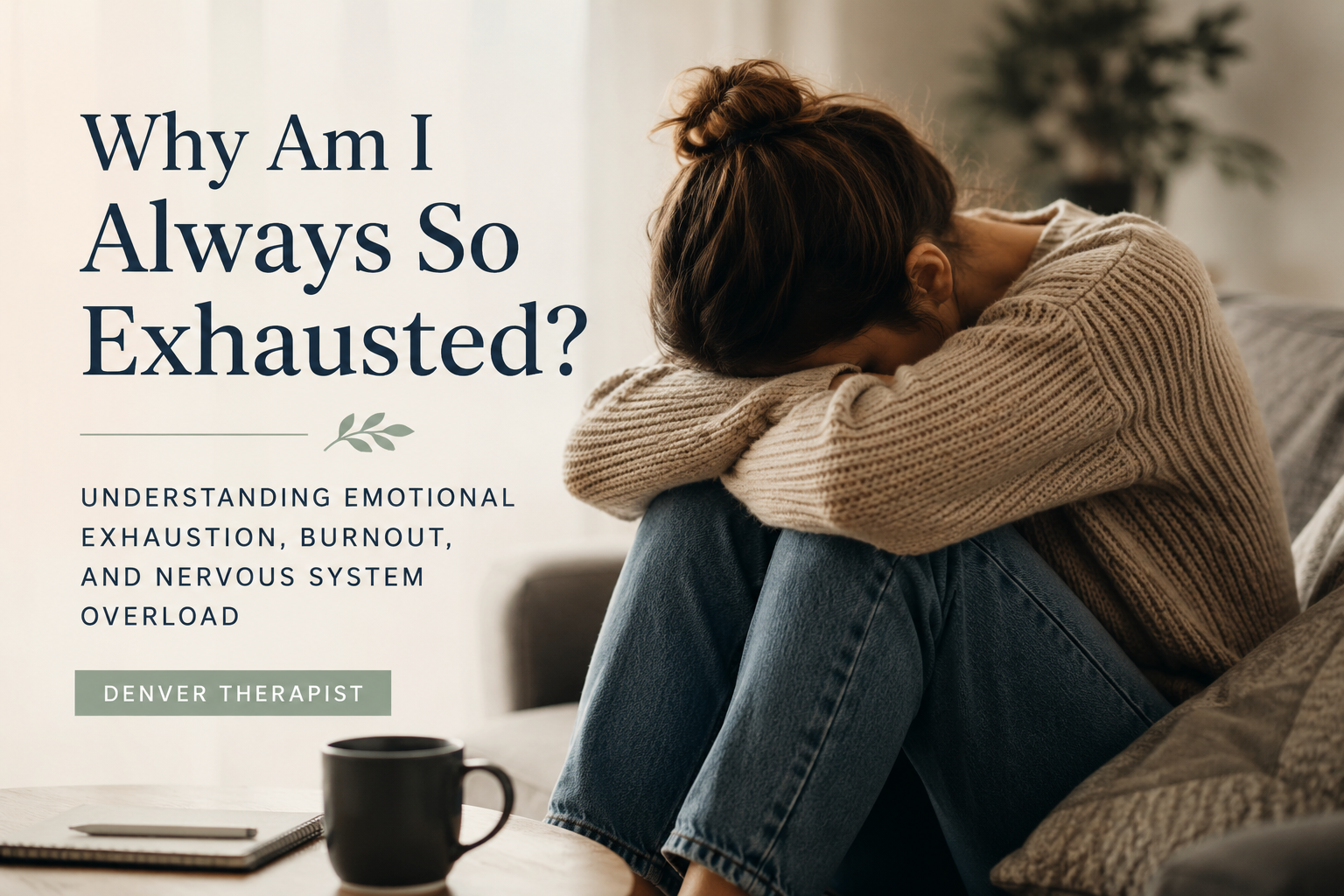
You sleep. You try to rest. Maybe you even take time off.
And somehow, you still feel exhausted.
If you keep asking yourself, “Why am I always so tired?” or “Why do I feel emotionally exhausted all the time?” — you are not alone. Many people in Denver struggle with chronic exhaustion that goes far beyond needing more sleep.
As a Denver therapist, I often work with people who appear high-functioning on the outside but feel completely depleted internally. They are managing careers, parenting, relationships, responsibilities, and constant mental overload while quietly running on empty.
The truth is: exhaustion is not always physical. Sometimes it is emotional, psychological, or nervous-system deep.
Emotional Exhaustion Is More Common Than You Think
Many people assume exhaustion means they are lazy, unmotivated, or simply not trying hard enough. But chronic exhaustion is often a sign that your nervous system has been under stress for too long.
Emotional exhaustion can develop from:
chronic anxiety
burnout
perfectionism
people pleasing
unresolved trauma
ADHD
emotional overload
chronic stress
constantly feeling “on”
According to the American Psychological Association, chronic stress can affect sleep, mood, concentration, immune functioning, and energy levels. Over time, your body begins operating in survival mode rather than recovery mode.
Signs Your Exhaustion May Be Emotional
Emotional exhaustion does not always look obvious. Many people continue functioning while internally feeling overwhelmed.
Common signs include:
waking up tired even after sleeping
difficulty concentrating
feeling emotionally numb
irritability or emotional overwhelm
procrastination and shutdown
difficulty relaxing
feeling guilty when resting
constantly overthinking
feeling disconnected from yourself or others
needing excessive downtime to recover
Sometimes people describe feeling like they are “burned out by life.”
Why Anxiety Makes You Feel So Tired
Anxiety is physically exhausting.
When your brain perceives stress or danger, your nervous system activates a fight, flight, freeze, or fawn response. Stress hormones increase. Your body becomes hyper-alert. Your mind scans constantly for problems, threats, or things you forgot to do.
Even if you look calm externally, your body may still be operating as if it is under pressure.
Over time, this chronic activation drains mental and physical energy.
Many people with high-functioning anxiety say:
“I can never fully relax.”
“My brain never shuts off.”
“I’m exhausted but wired.”
“I feel guilty doing nothing.”
The National Institute of Mental Health explains that anxiety disorders can create both emotional and physical symptoms, including fatigue, restlessness, sleep disruption, and muscle tension.
Burnout Is Not Just About Work
Burnout is often misunderstood as simply working too much. But emotional burnout can happen when someone has been emotionally overextending themselves for too long without enough support, rest, boundaries, or emotional safety.
Burnout is especially common among:
caregivers
parents
helping professionals
perfectionists
highly sensitive people
people who struggle to say no
high achievers
The World Health Organization defines burnout as chronic workplace stress that has not been successfully managed. Symptoms include exhaustion, mental distance, and reduced effectiveness.
Trauma and Nervous System Exhaustion
Sometimes chronic exhaustion is connected to unresolved trauma or long-term emotional stress.
Trauma does not always mean a single catastrophic event. Emotional neglect, unstable relationships, chronic criticism, or growing up in environments where you had to constantly monitor other people’s emotions can also affect the nervous system.
Many adults learned to:
overfunction
suppress emotions
stay hypervigilant
avoid conflict
anticipate others’ needs
push through exhaustion
Eventually, the nervous system becomes overwhelmed.
The National Child Traumatic Stress Network explains that chronic stress and relational trauma can have long-term effects on emotional regulation, physical health, and nervous system functioning.
Could ADHD Be Contributing to Your Exhaustion?
Many adults — especially women — experience ADHD as chronic overwhelm rather than hyperactivity.
ADHD can contribute to:
mental fatigue
emotional dysregulation
task paralysis
constant overstimulation
burnout from masking symptoms
difficulty prioritizing and organizing
People with undiagnosed ADHD often feel like ordinary tasks require enormous effort.
Therapy for Emotional Exhaustion in Denver
Many people try to “push through” exhaustion for years before seeking support. But chronic emotional exhaustion is often a signal that something deeper needs attention.
Therapy can help you:
understand the root causes of exhaustion
regulate your nervous system
reduce anxiety and overwhelm
improve boundaries
process trauma and chronic stress
reduce perfectionism and people pleasing
reconnect with rest and emotional balance
As a therapist in Denver, I work with adults experiencing anxiety, burnout, emotional overwhelm, perfectionism, relationship stress, and nervous system dysregulation. Healing is not about becoming more productive. It is about creating a life that feels more sustainable, connected, and emotionally manageable.
You Do Not Have to Keep Running on Empty
If you are constantly exhausted, your mind and body may be trying to tell you something important.
You are not lazy. You are not failing. And you do not have to keep carrying everything alone.
With support, it is possible to move out of survival mode and begin feeling more grounded, rested, and emotionally connected again.