
Why Do I Get So Overwhelmed So Easily? | Denver Therapist Explains Emotional Overwhelm
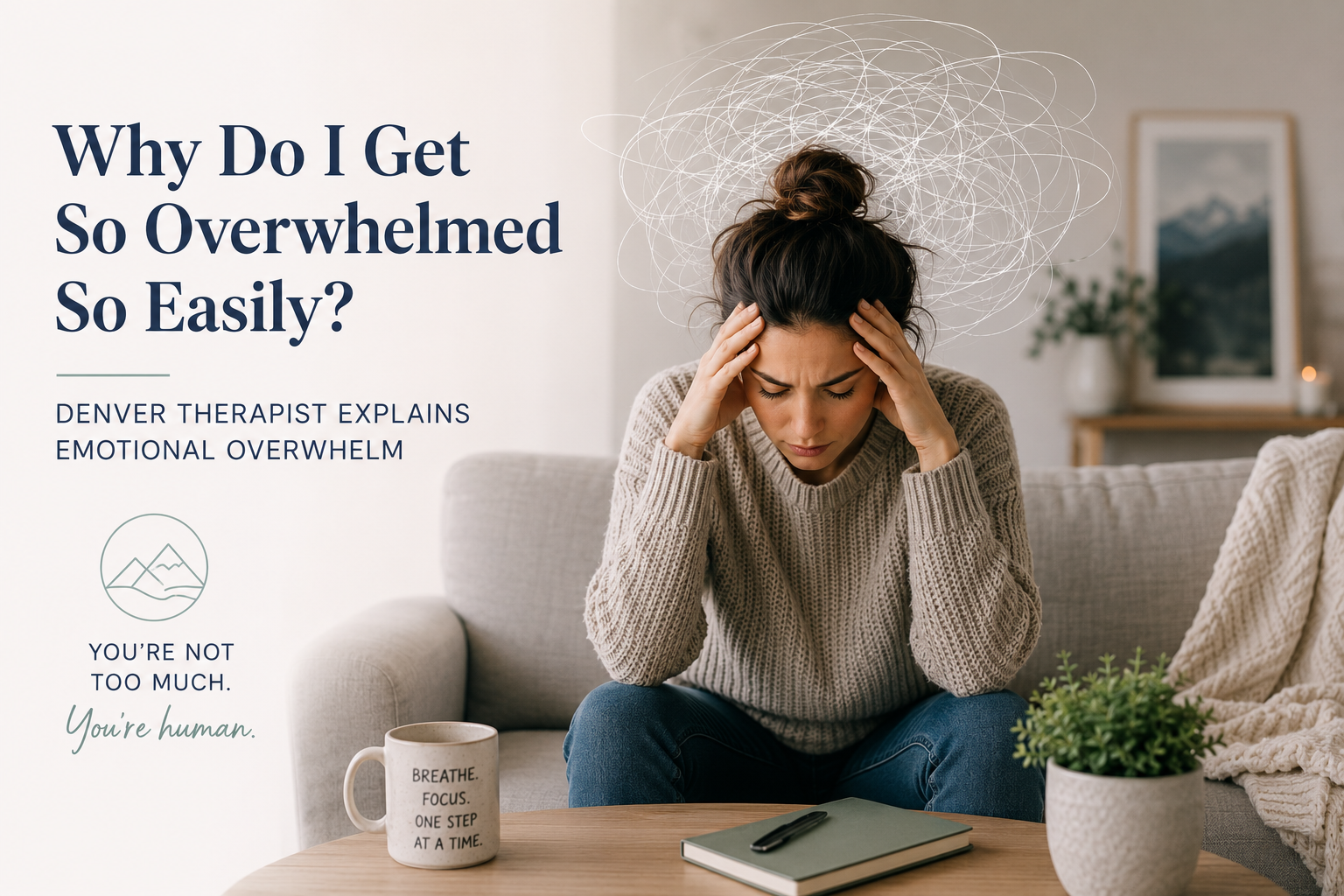
Do you ever feel like ordinary life is somehow too much for you?
Maybe small tasks pile up and suddenly feel impossible. You stare at your to-do list and freeze. Text messages go unanswered because responding feels overwhelming. Simple decisions feel exhausting. You keep thinking:
“Why can’t I handle things like everyone else?”
“Why do I get overwhelmed so easily?”
“What’s wrong with me?”
If this sounds familiar, you are not alone.
As a Denver therapist, I work with many adults who appear highly functional on the outside while privately struggling with chronic overwhelm, anxiety, burnout, emotional exhaustion, and nervous system dysregulation.
The truth is: overwhelm is not usually a sign of laziness or weakness. It is often a sign that your nervous system has been overloaded for too long.
What Emotional Overwhelm Actually Feels Like
Emotional overwhelm can show up mentally, emotionally, and physically.
You might notice:
difficulty concentrating
procrastination or shutdown
irritability
feeling emotionally reactive
exhaustion after basic tasks
anxiety that never fully turns off
difficulty making decisions
avoiding emails or responsibilities
feeling frozen or paralyzed
needing excessive recovery time after social interaction
Many people describe feeling like their brain has “too many tabs open.”
According to the American Psychological Association, chronic stress can significantly impact concentration, mood regulation, sleep, and overall functioning.
Your Nervous System May Be Stuck in Survival Mode
When the brain perceives stress or threat, the nervous system activates survival responses like fight, flight, freeze, or fawn.
For some people, this response becomes chronic.
This can happen because of:
chronic stress
perfectionism
ADHD
burnout
constantly overextending yourself
Over time, the nervous system becomes overloaded. Even small tasks can start to feel emotionally and physically exhausting.
You may notice yourself:
shutting down when overwhelmed
avoiding responsibilities
becoming emotionally flooded
needing isolation to recover
feeling exhausted by everyday demands
The National Institute of Mental Health explains that chronic stress can keep the body in an ongoing state of activation, impacting both mental and physical health.
Anxiety and Overthinking Can Create Constant Overwhelm
Many people who struggle with overwhelm are also dealing with chronic anxiety.
An anxious brain is constantly scanning:
What did I forget?
What if I fail?
What if someone is upset with me?
What if I can’t handle everything?
Even when nothing dangerous is happening, the nervous system may still feel unsafe.
People with high-functioning anxiety often look productive externally while internally feeling overwhelmed, mentally exhausted, and unable to relax.
This is especially common among:
perfectionists
caregivers
highly sensitive people
people pleasers
high achievers
ADHD and Emotional Overwhelm in Adults
Many adults — especially women — experience ADHD primarily as overwhelm rather than hyperactivity.
ADHD can affect:
executive functioning
emotional regulation
organization
task initiation
prioritization
sensory processing
This means seemingly simple tasks can require enormous mental energy.
Many adults with ADHD feel ashamed because they believe they “should” be able to manage things more easily.
According to CHADD (Children and Adults with ADHD), adults with ADHD often experience overwhelm, emotional dysregulation, chronic stress, and burnout related to executive functioning challenges.
Trauma Can Make Everyday Life Feel Overwhelming
Trauma does not always look dramatic.
Sometimes overwhelm develops from years of:
emotional neglect
chronic criticism
unstable relationships
unpredictable environments
pressure to suppress emotions
needing to stay hyperaware of others’ moods
Many people learned early in life to:
overfunction
anticipate others’ needs
stay emotionally vigilant
avoid conflict
ignore their own limits
Eventually, the nervous system becomes depleted.
The National Child Traumatic Stress Network explains that chronic relational stress and trauma can have long-term effects on emotional regulation and nervous system functioning.
Why You Keep “Shutting Down”
When overwhelm becomes too intense, many people move into a freeze response.
This can look like:
procrastination
zoning out
scrolling for hours
emotional numbness
avoidance
inability to start tasks
feeling disconnected from yourself
People often judge themselves harshly during these moments. But shutdown is frequently a nervous system response — not laziness.
Therapy for Anxiety and Overwhelm in Denver
Therapy can help you understand why your nervous system feels overloaded instead of continuing to blame yourself for struggling.
In therapy, you can begin to:
understand your overwhelm patterns
regulate your nervous system
reduce anxiety and emotional flooding
improve boundaries
heal perfectionism and people pleasing
process unresolved trauma
develop more self-compassion
create a more sustainable relationship with yourself
As a Denver therapist, I work with adults experiencing anxiety, emotional overwhelm, burnout, trauma, perfectionism, and nervous system dysregulation. Many people spend years believing they are failing when they are actually exhausted and overloaded.
You Are Not Failing at Life
If you get overwhelmed easily, it does not mean you are weak, lazy, or incapable.
Often, overwhelm is a signal that your nervous system has been carrying too much for too long.
Healing is not about forcing yourself to push harder. It is about understanding what your mind and body have been trying to communicate — and learning how to respond with support instead of shame.